
NTPC Green Energy Limited (NGEL) and Nxtra Data have signed an agreement to explore renewable energy project opportunities for Nxtra's data centres across India.

IPOs worth Rs 50,000 crore including Hyundai, NTPC Green Energy and Swiggy are set to hit the market in late October or early November.

'We are expecting investment, public and private, of around Rs 40 trillion by 2029.'

Among Sensex firms, HCL Tech, ICICI Bank, Titan, Trent, Kotak Mahindra Bank, Hindustan Unilever, Mahindra & Mahindra and HDFC Bank were the major laggards. However, Adani Ports, Bharti Airtel, SBI, NTPC and Sun Pharma were among the gainers.

Power generation decelerated 4.7 per cent year-on-year (Y-o-Y) to 155 billion units (BU) in August 2024. This was the first downtrend in many years, albeit on a high base - generation had increased 19 per cent Y-o-Y to 163 billion units (BU) in August 2023. The dip was partly due to excess rainfall, which pared cooling demand and also reduced need for irrigation.

As the political uncertainty settles down, investors are reviewing their assumptions about the power sector. Demand here is likely to continue to grow strongly in the long-term at around 5-6 per cent CAGR (compounded annual growth rate) during the next 6-7 years. Given policy continuity, several trends will persist.

The power sector presents a puzzle. A fast-growing economy should be aligned to higher power demand but that hasn't been the case in the financial year 2026 till date (FY26TD).

The primary market will remain abuzz with more than half a dozen companies, including Hyundai Motor India, Swiggy, and NTPC Green Energy, lined up initial public offerings over the next two months to raise around Rs 60,000 crore, merchant bankers said. Apart from these three firms, Afcons Infrastructure, Waaree Energies, Niva Bupa Health Insurance, One Mobikwik Systems, and Garuda Construction are among the companies planning to launch initial public offerings (IPOs) during October-November, they added. Together, these firms are looking to raise Rs 60,000 crore through their IPOs.
The power sector is always strongly correlated to economic activity and is receiving its share of investor attention as India's post-Covid-19 recovery continues. India's leading integrated power producer, the public sector undertaking (PSU) NTPC controls around 25 per cent of India's power capacity. It continues to increase installed capacity, in thermal as well as renewables (solar, wind, green hydrogen) and hydropower and pumped hydro, and also has backward integration into coal mining, and explored nuclear.

The calendar year 2024 is set to go down as the best year for initial public offerings (IPOs) in terms of funds raised. Following the IPOs of food delivery major Swiggy and two other companies slated for next week, this year's total will reach nearly Rs 1.2 trillion, going past 2021's record tally of Rs 1.19 trillion. Swiggy's Rs 11,327 crore IPO, the sixth-largest in India, and solar energy firm Acme Solar Holdings' Rs 2,900 crore IPO opened on Wednesday (Nov 6), while health-tech firm Sagility India's Rs 2,106 crore IPO opened a day earlier.

For investors who missed the initial IPO frenzy, the market correction is an opportunity to selectively invest in promising names, but patience and careful evaluation remain the key.

Fundraising by Indian companies through equity and debt reached an all-time high in the financial year 2024-25 (FY25), according to data collated by primedatabase.com. Fundraising through debt stood at Rs 11.1 trillion in FY25, including contributions from InvITs (infrastructure investment trusts) and REITs (real estate investment trusts).

Fundraising by Indian corporates through equity and debt reached all-time high in the calendar year 2024, according to primedatabase.com. The overall public equity fundraising stood at Rs 3.7 trillion in 2024, a rise of 159 per cent from Rs 1.4 trillion in 2023. If Rights Issues of Rs 25,973 crore were to be added, the overall equity fundraising would touch nearly Rs 4 trillion in 2024.

Lock up on shares worth nearly Rs 1.2 trillion ($14 billion) belonging to 50 companies will end between now and January 31, said Nuvama Institutional Equities in a note. Most of the shares are held by promoters, strategic investors or pre-listing shareholders in companies that have gone public in recent weeks or months.

From the 30-share Sensex pack, Adani Ports surged 6 per cent. NTPC, HDFC Bank, Bajaj Finance, Maruti and Axis Bank were among the other gainers. In contrast, Titan, State Bank of India, Asian Paints, Tata Consultancy Services, HCL Tech, Sun Pharma, IndusInd Bank and ICICI Bank were among the laggards.

Investors became richer by nearly Rs 8 lakh crore on Wednesday as benchmark BSE Sensex surged by 740 points amid value buying in utilities and power shares and a strong trend in global markets. The 30-share BSE Sensex surged by 740.30 points or 1.01 per cent to close at 73,730.23.
It is not just the secondary market that is witnessing a revival in fortunes. Even the initial public offering (IPO) market have roared back to life, with investors submitting bids worth over Rs 2.2 trillion on the three IPOs that wrapped up on Friday. Fashion retailer Vishal Mega Mart (VMM)'s IPO (fifth largest of the year) garnered 27.3x subscription, with bids exceeding Rs 1.6 trillion.

Corporate India is embarking on an ambitious investment drive, with capital expenditure (capex) expected to double to $850 billion over the next five years, according to a report by S&P Global Ratings. Indian power & transmission, airlines, and green hydrogen sectors would spearhead the spending, the report said.
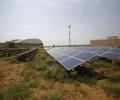
Adani Green Energy entered the list of top-10 most valued companies in terms of market capitalisation (m-cap) in the country on Monday after its stock price zoomed 16.3 per cent to hit a new high of Rs 2,701.6 on the BSE. Adani Green Energy's m-cap now stands at Rs 4.22 trillion, surpassing Bharti Airtel, which has an m-cap of Rs 4.16 trillion. With today's rally, the stock has zoomed about 25 per cent in the last two trading days after UAE's International Holding Company (IHC) agreed to invest Rs 3,850 crore in Adani Green Energy through preferential issue.

State Bank of India, NTPC, ITC, Asian Paints, Bajaj Finance and Bajaj Finserv were also among the major laggards. In contrast, Power Grid, UltraTech Cement, HCL Technologies and Axis Bank were among the gainers.

Hyundai Motor India Limited's (HMIL's) record Rs 27,870 crore initial public offering (IPO) may not have set the primary market alight with sky-high subscription levels, but it has spelled a windfall for the five investment banks steering the share sale. The Indian arm of the South Korean carmaker paid Rs 493 crore - 1.77 per cent of the issue size - in fees and commissions to the book running lead managers (BRLMs), marking the largest-ever payout for an IPO in the country.

India witnessed a record-breaking surge in deal activity in February, with 226 M&A and private equity deals totaling $7.2 billion -- the highest monthly deal volume in the last three years, according to the Dealtracker report of Grant Thornton Bharat. "This represents a 67 per cent increase in volumes and a 5.4-fold increase in values compared to February 2024, while a 14 per cent increase over the previous month," it said.

Trump's tariff threats spooks markets; Sensex down 106 points

Among Sensex firms, Tech Mahindra, HCL Tech, Eternal, Axis Bank, Maruti, Tata Steel, HDFC Bank and Asian Paints were the gainers. However, Adani Ports, Trent, Tata Motors, Hindustan Unilever and NTPC were among the laggards.

The primary market is expected to remain vibrant, with at least 10 companies, including supermart major Vishal Mega Mart and Blackstone-owned diamond grading firm International Gemmological Institute (India) Ltd expected to raise a combined Rs 20,000 crore in the next month, merchant bankers said. Education-focused NBFC Avanse Financial Services, TPG Capital-backed Sai Life Sciences, hospital chain operator Paras Healthcare, and investment bank DAM Capital Advisors are also among the companies planning to launch their IPOs in December, they added. The companies aim to raise a total of Rs 20,000 crore through their public offerings.

India's traditional companies are now moving full scale into the renewable and alternative energy space that had been dominated by smaller players over the past decade. Companies such as government-owned NTPC and the Adani and the Tata groups restructured their businesses well in time to become major players in the green space. At the same time, other conventional companies, such as Larsen & Toubro and Reliance Industries Ltd (RIL), which have a presence both in the energy sector as well as myriad other activities - construction, technology and retailing - are tying up with new-age companies to hitch a ride to a greener path.

The IPO market is set to be bustling next week, with 11 companies like Vishal Mega Mart, TPG Capital-backed Sai Life Sciences and fintech firm One Mobikwik Systems gearing up to launch their initial share sales, collectively aiming to raise nearly Rs 18,500 crore. Other mainboard IPOs to be launched during this period are Inventurus Knowledge Solutions Ltd and Blackstone-owned diamond grading firm International Gemmological Institute (India) Ltd.

From the 30-share blue-chip pack, Adani Ports jumped over 5 per cent. NTPC, Tata Steel, Bajaj Finserv, Zomato, Bajaj Finance, Tata Motors, State Bank of India, IndusInd Bank and Maruti were among the other big gainers. From the 30-share pack, Hindustan Unilever, Titan, Tata Consultancy Services, Infosys and UltraTech Cement were the other laggards.

Adani Power, part of the Adani group, plans to add close to 6 gigawatts (Gw) of new power assets in the next five years, according to an investor presentation by the company. That is clearly meant to ride on India's burgeoning power demand. But there is another side to it: All of this new capacity is expected to be thermal power, or power produced from coal.

The Supreme Court of India has dismissed a petition filed by an NGO challenging the construction of a renewable energy project at the Jayakwadi Dam in Maharashtra. The court criticized the NGO for opposing the project, stating that it would be detrimental to the country's progress if every project was resisted. The court also raised questions about the NGO's bona fides and funding, suggesting that it may have been influenced by a company that lost the tender for the project. The project, a floating solar power plant, was approved by the National Green Tribunal (NGT) and the Ministry of Environment, Forests and Climate Change. The NGT had previously dismissed the NGO's plea, stating that it could not find any law prohibiting such activities in the eco-sensitive zone. The Supreme Court upheld the NGT's decision, finding no grounds to interfere.

Fundraising momentum is expected to accelerate further in the New Year, potentially surpassing 2024's record figures

Shares of Adani Green Energy (AGEL) continued their upward movement, hitting a new high of Rs 1,955.90, up 2.6 per cent on the BSE in Wednesday's intra-day trade in an otherwise weak market. The S&P BSE Sensex was down 0.77 per cent at 60,285 at 11:01 am. In the past 14 trading sessions, the stock of the renewable energy arm of the diversified Adani Group has zoomed 50 per cent from Rs 1,307.05 on December 30, 2021. In comparison, the S&P BSE Sensex was up 4.3 per cent during the same period.

Eyeing to become India's largest player in 2020 Adani Group plans to invest 70 per cent of its capital expenditure in clean energy and energy efficient systems.
Billionaire Gautam Adani's Group on Wednesday announced the acquisition of SoftBank Group Corp's renewable power business in India for a deal value of $3.5 billion (approximately Rs 25,500 crore), to become the world's largest solar company. In a statement, Adani Green Energy Ltd, the renewable energy unit of the port-to-energy conglomerate, said it has inked share purchase agreements to buy 100 per cent of SB Energy India from SoftBank and Bharti Group. Without giving deal details, the statement said the transaction values SB Energy India at an enterprise valuation of approximately $3.5 billion, it stated. The transaction marks the largest acquisition in the renewable energy sector in India.

This includes distancing themselves from the new and emerging super-critical technology.
There's a straightforward relationship between economic activity and power consumption. If economic activity increases, so does power consumption. Since the latest GDP (gross domestic product) data indicates India's growth rates exceeded expectations in the second half if the 2022-23 financial year (H2FY23) and GDP estimates of FY24 are strong, we would expect power consumption to rise as indeed it has. There is also a direct relationship between power consumption and National Thermal Power Corporation or NTPC's results since the public sector undertaking (PSU) is the largest power generator in India.

Top gainers in the Sensex pack included Bajaj Finance, ONGC, Yes Bank, HDFC, HCL Tech, Tech Mahindra, TCS, ICICI Bank and RIL, rising up to 3.57 per cent.

From the Sensex pack, Reliance Industries, Bajaj Finserv, HDFC Bank, Adani Ports, Maruti Suzuki India, Axis Bank, Hindustan Unilever, Sun Pharmaceuticals and Asian Paints were among the laggards. Reliance Industries fell the most by 2.38 per cent to close at Rs 1,171.10 apiece.
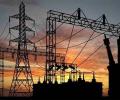
Power utilities may report moderate growth in earnings for Q3FY25. Generation is up 3 per cent year-on-year (Y-o-Y) in Q3 on lower cooling demand and high base, to 429 billion units (BU). Peak demand was steady at 224 Gw in Q3FY25, a 10 per cent decline from the record highs of 250 Gw in May 2024.

Falling the second consecutive session, equity benchmark Sensex dropped over 140 points on Friday, tracking weakness in banking and energy stocks amid a mixed trend overseas. Investors also remained concerned over persistent foreign fund outflows, traders said. The 30-share BSE index ended 143.20 points or 0.24 per cent lower at 58,644.82. Similarly, the NSE Nifty shed 43.90 points or 0.25 per cent to close at 17,516.30.
 © 2026 Rediff.com - Advertise with us - Disclaimer - Privacy Policy - Sitemap - Feedback - About us - Terms of use - Grievances